1. Deposit the Cheque in the Bank
Present the cheque to your bank within its validity period (usually 3 months from the cheque date).
If the cheque bounces, the bank will give you a Cheque Return Memo stating the reason, such as:
Insufficient funds
Account closed
Payment stopped
Signature mismatch
Keep both the dishonoured cheque and the return memo safely.
2. Send a Legal Demand Notice (Within 30 Days)
After receiving the return memo, you must send a legal demand notice to the debtor.
Key points:
The notice must be sent within 30 days from the date you received the bank memo.
It should demand payment of the cheque amount.
It is usually sent through registered post or courier with proof of delivery.
The debtor is given 15 days to make the payment after receiving the notice.
3.Wait 15 Days for Payment
If the debtor pays within 15 days, the matter ends.
If the debtor does not pay within 15 days, you get the right to file a criminal complaint.
4.File a Case in Court (Within 30 Days)
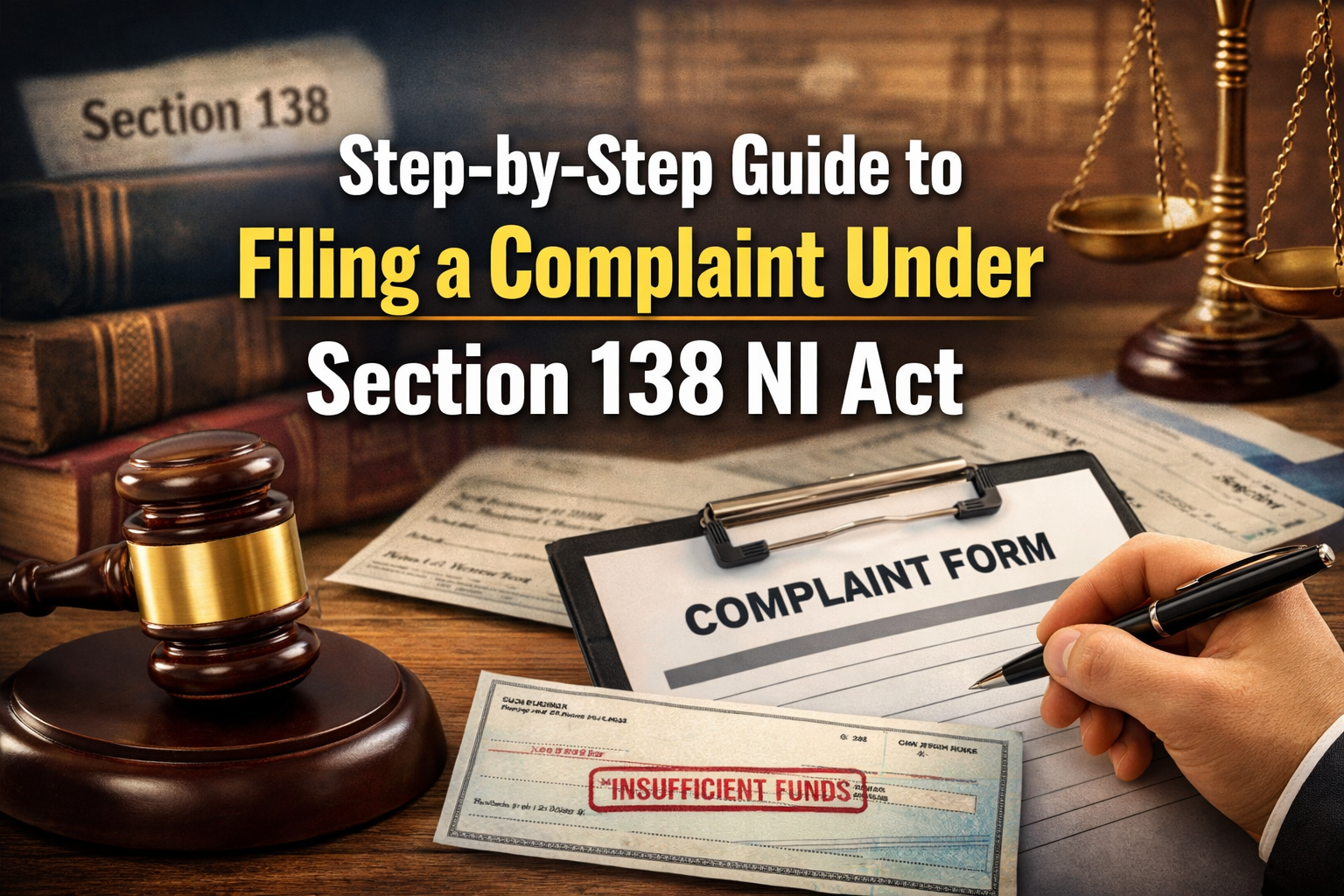
You must file a complaint under Section 138 NI Act in the appropriate Judicial Magistrate Court.
This must be done within 30 days after the 15-day notice period expires.
Documents usually required:
Original cheque
Bank return memo
Copy of legal notice
Postal receipt / delivery proof
Affidavit and complaint
5. Court Proceedings
The court will:
Review your complaint
Issue summons to the debtor
Conduct hearings
If the debtor is found guilty, the court may order:
Payment of cheque amount with compensation
Fine
Imprisonment up to 2 years
Often these cases end in settlement or payment during proceedings.
Important Time Limits Summary
Send legal notice: within 30 days of cheque bounce
Debtor payment window: 15 days after notice
File case: within 30 days after the 15-day period